Muamba de Galinha is a traditional dish in Angola, it is related to the Poulet moambe the Congo River region.
Muamba de Galinha is made with chicken, onion, palm oil or muamba of dendem, garlic, okra and a type of Angolan chilli called gindungo.(I Will substitute it for chilli peppers).
Ingredients:
A chicken, cut into serving pieces.
Juice of one lemon (optional).
One cup (100 ml) of red palm oil (or a mixture of palm oil and other cooking oil).
2 or 3 chopped onions.
Two cloves of garlic chopped.
A chilli pepper (or guindungo) removed entirely after cooking for a slightly spicy dish, or cut without the seeds for a spicy dish.
3 tomatoes (peeled if desired) cut into quarters.
300 gof chopped pumpkin.
One or two dozen Okra , washed and with the ends cut. We can use them whole, cutlengthwise in half or into pieces depending on the effect we want to give to the dish.Okra makes a gelatinous dish,the more cut into pieces the greater is the gelatinous effect.I decided to cut them lengthwise in half (see picture below).
Salt to taste.
Where to buy the ingredients: The hardest to find are the okra and palm oil.I bought both in Lavapies, near the metro in Miguel Servet Street where you can find multicultural food stores. Method: 1. If you want ,you can marinate the chicken, you should rub the chicken with a mixture of lemon juice, garlic, chillies and salt.We leave it like that for one hour (we can leave for 15 minutes to one hour, as we prefer).
2. We put the palm oil in a large pot and place it over medium heat, then we add the chicken and cook it just a little without allowing it to be done.
3. Next add the onion, garlic, chilli, tomato and salt.After five minutes pour water to cover the chicken.
4. Stir occasionally and cook over medium heat for one hour,until chicken is almost done.
5. Add the pumpkin and a little water if you see that there is little into the pot, cook until chicken is completely done.
6. Now is time to add the okra, stir, and cook for another 10 or 15 minutes until the okra is tender.
The most traditional accompaniment to Muamba de Galinha is Funge that can be made with corn or cassava flour. You can also serve it with rice instead of Funge.
Here you have a link to my favourite cooking tools where you can find my spices grinder:
My comments to the recipe: I must confess that I was afraid for the outcome of the recipe, I had not tried palm oil until now.Palm oil has a strong test to which we are not use in Europe, but I must say that mixed with pumpkin and okra is quite enjoyable to eat. I can say that I enjoyed trying this dish which allowed me to experiment a new taste from the point of wiew of a European palate.
In Saudi Arabia it is not allowed to drink alcohol, therefore , the most famous drink is lemonade , keep in mind that the quality of the lemons in this land is excellent, (in Spain we can not complain about the quality of ours). It is a very refreshing drink ,especially in summer , but you can enjoy it all year long.
Ingredients (1.5 – 2 liters of lemonade)
• 5 large lemons.• 1 liter of water .• 100 g of sugar .• 2 grams of fresh mint leaves.
Method:
1. Squeeze lemons.2. Put the the squeezed lemons (and its pulp if desired) into a jug , be careful not to add any seed. Add sugar and mint too.3. With a mixer mix all ingredients ( mint leaves will stay in small pieces ) .4. Put the jug into the fridge to cool it, drink it cold!.
My comments to the recipe :It's an easy recipe and you achieve a great result. I was afraid to add the mint, because the bunch I bought was very smelly and I thought the lemonade would only have the taste of mint ... on the contrary, the combination is perfect, I encourage you to try it! Where to buy the ingredients : I found fresh mint in one of the shops located in the Street Antonio Calvo , near Madrid's mosque .If you live in a different area and know where to buy mint , leave a comment indicating the place,this way, other readers in your area , city or country will know where to buy it.
Here you have a link to my favourite cooking tools where you can find my spices grinder:
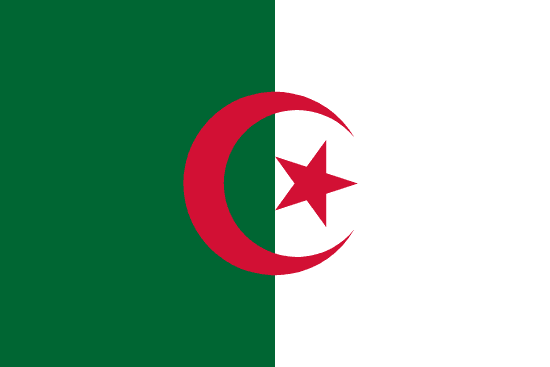
I start my second tour around the world in Algeria , a country placed in North Africa .Its capital city is Algiers ,it has a population of 34 million inhabitants and an area of 2,381,740 km2 It is one of the leading producers of oil and gas in Africa .It is a country of Berber origin, a minority of the population still speaks the berber language. It has undergone several invasions along its history , among them , the expansion of Islam and Arabization,the Ottoman and French colonization are the ones that have most influenced its culture and cuisine. Not to mention the Spanish influence produced by the mass migration of all Maghreb Moors expelled from Al- Andalus during the period betwen the fifteenth and the seventeenth century. Algeria gained independence from France in 1962. Islamic fundamentalism turns the country into a not recommended place for non-Arabs , we know very little about this country, before we talk about the cuisine of the country I recommend this youtube video which shows some pictures from it. I was pleasantly surprised by the lovely images:
Cuisine of Algeria :
Couscous is an Algerian national dish , the main ingredient is semolina, which is combined with chicken or lamb , vegetables or eggs. We should not forget other very significant and unique dishes from Algeria :
' burek ' , a pastry filled with meat , fried eggs and onions.
' dolma ', that is made with pepper and tomato.
' Kemia ' , a very original dish with tomatoes , carrots, beans and sardines.
The meat most used is the lamb , important dishes are :
' Ihan liahlou ' , a lamb stew with prunes , cinnamon and orange blossom
' Mechoui ' , whole roasted lamb skewered on a stick .
A popular dish in the month of Ramadan is' chorba ' , a soup made with tomatoes , onions , carrots , zucchini and lamb, chicken or beef. Seasoned with salt, pepper , cinnamon and parsley , sometimes also chickpeas and red peppers are added.
Typical desserts in Algeria are made from semolina,usually soaked in honey,accompanied with dates and nuts as main ingredients . Examples are Makrout , Samsa or Hrisa . We Should not forget that green tea with fresh mint is one of the most consumed beverages .
It is a vegetable oil obtained from the fruit of the African palm. This palm is native to southwestern Africa, between Angola and Gambia.
This type of oil was first obtained 3600 years ago, it was used especially in Western Guinea from where it came to America, later on this oil arrived in China from America.
Nowadays the largest palm oil production is centered in countries like Malaysia, Indonesia, Nigeria, Thailand, Colombia, New Guinea, Ivory Coast, Costa Rica, Honduras, Brazil and Guatemala.
It is a natural source of Vitamin A and Vitamin E, nevertheless, due to its high saturated fat content, it has negative consequences to human health ,since a long and abundant consumption of palm oil can raise the ratio of LDL cholesterol in the blood.
Its flavour is stronger than olive oil's, but gives the dishes a distinctive flavour and color the sauces, I strongly believe that you should not avoid using this oil if the original recipe includes this ingredient , that's the only way to know the real flavor of the dish!
Where to Buy Palm Oil in Madrid:
Near Metro Lavapies , you can find the Miguel Servet Street where there are a lot of multicultural food stores selling this kind of oil.
If you come from a different place and know where to find palm oil in your zone, please leave a comment telling us, this way other readers will have more possibilities to find this ingredient!